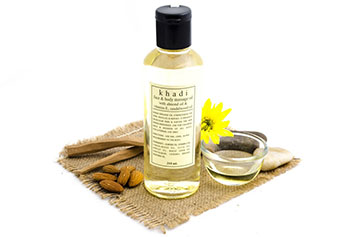
Valentine’s Day is just around the corner. I celebrate this day by spoiling myself in mind, body and spirit. This year, in addition to reading my favorite academic journal in a cozy coffee shop, ski touring in a secret stash of powder and concluding the day with a fantastic home-cooked meal, I am going to add a little fire to the mix. How? I have recently been introduced to embrocations. Embrocations are topical preparations that increase circulation in muscle tissue, and are staples in the world of European cycling and Nordic teams. They are rubbed into muscles before a warm-up to enhance the process and keep blood flow to hard working tissue during training or competition. Most embrocations use capsicum, the heat agent in chile peppers, to do the job. I have been playing with JTree’s Full Heat Embrocation on my calf muscles before running and skiing to support these muscles as they recover from a bout of tendonitis. I have found that the embrocation is letting me train just a little harder at this stage of my healing than I would normally expect. I have also been using it on my toes before a long cold day of riding chair lifts to keep my feet a bit warmer with great success. I’m excited to see how it may help me avoid cramping on long cycling days this spring. Because I’m now obsessed with these little spicy creams, Focus Bodywork is now carrying JTree’s Full Heat Embrocation. So, this Valentine’s Day give a little love to your hard working muscles, and add a little spice to your workout.
How Massage Heals Sore Muscles
Check out this blog post in the New Your Times, How Massage Heals Sore Muscles.
This is a great discussion of the benefits of post-workout massage, including the physiology of muscle repair and a little plug about why taking NSAIDS (like ibuprofen) for muscle pain may not be such a good idea.
Skiers Thumb is not Caused by Hitchiking to the Ski Hill
A few flakes are falling in the Wasatch, and the powder hounds are lining up at the base of Little Cottonwood Canyon to hitch a ride up to the resorts. Their thumbs flagging a ride are a sign that they are not suffering skiers thumb. …yet.
Skiers Thumb is a strain or rupture of the ulnar collateral ligament of the thumb. It causes pain and swelling in the web of the hand between the base of the thumb and index finger, and it makes it difficult to grip or fully extend the thumb. The injury usually occurs when a skier falls on an open palm with the ski pole still in the hand. The pole, on impact, forces the thumb to the dorsum of the hand (non-palm side), overstretching or tearing the ligament. Most skiers know this discomfort. A mild strain of the ligament is quite common and can plague a skier all winter if left untreated.
In serious cases where after a fall the thumb swells, becomes painful to move, may bruise, and/or becomes more painful over the next few days, it is best to have a sports medicine doctor or orthopedist evaluate the injury. Typical treatment involves immobilization of the thumb for 4-6 weeks, but you can usually sweet talk your doctor into a cast where a ski pole can fit so you can still ski. However, surgery is occasionally required to repair the ligament.
In mild cases where the thumb is merely sore and quickly improves, self-care can help heal the injury so it does not hurt all ski season. For the first few days after any mild strain you should ice the area several times a day, reduce motion with an ace bandage or over the counter splint, and protect it from a repeat blow, meaning that skiing is not a good idea. After 3-5 days of gently care for your thumb, you can start performing exercises to help heal the ligament.
Exercises
Thumb active range of motion: With your palm flat on a smooth surface, move your thumb away from your hand as far you can. Hold this position for 5 seconds and bring it back to the starting position. Next, rest your hand on the table in a handshake position. Move your thumb out to the side away from your palm as far as possible. Hold for 5 seconds. Return to the starting position. Next, bring your thumb across your palm toward your little finger. Hold this position for 5 seconds. Return to the starting position. Three pain free sets of ten are recommended. Pain is a sign that you are re-tearing tissue!- Wrist Range of Motion (do three sets of 10 of each)
- Flexion: Gently bend your wrist forward with an open hand then curl the fingers into a fist. Hold for 5 seconds.
- Extension: Gently bend your wrist backward, straitening the fingers as you extend the hand. Hold this position 5 seconds.
- Side to side: Gently move your wrist from side to side in a beauty queen wave motion. Hold for 5 seconds at each end.
After a few days of performing these range-of-motion exercises, normal motion should be restored. If not, see a doctor. Otherwise, you are ready to start strength training.
- Thumb strengthening: Pick up small objects such as pennies between your thumb and each of your other fingers. Practice this exercise for about 5 minutes.
- Finger spring: Place a large rubber band around the outside of your thumb and the fingers. Open your fingers to stretch the rubber band. Do three sets of 10.
- Grip strengthening: Squeeze a tennis ball and hold for 5 seconds. Do three sets of 10.
- Wrist flexion: Hold a light weight or soup can in your hand with your palm facing up. Bend your wrist upward. Slowly lower the weight and return to the starting position. Do three sets of 10. Gradually increase the weight.
If your Skiers Thumb injury is mild and you take care of the injury you should be back to skiing pain-free in about two weeks. Within this time frame you should also be able to fully extend your thumb and catch a friendly ride up the canyon. Happy Skiing!
In 2012 I’m Going to Eat More Cookies… For My Health!
2012 is just around the corner. Although I don’t make resolutions per se, I do use the anticipation of a new calendar to plan out my training and race schedules and to revise repeat plans based on the successes (and failures) of last year. I also can’t help but reflect on the numbers on the scale and fantasize about the rewards of being two pounds lighter, decreasing my body fat by 1%, shaving 5 seconds off my marathon time, completing the Mid-Week Mountain Bike Race Series, and waiting for the boys at the ridge line on a dawn patrol.
As I plan out my 2012 calendar, I also page through the recent edition of my favorite journal, The Physician and Sports Medicine, which has several articles on osteoarthritis (OA). Several research studies note a fact I hate to dwell on: women athletes (especially those with a history of knee injuries) have a higher risk of developing OA than men and their sedentary counterparts. The usual excuses are noted in each article: women have a greater angle of the femur (thigh bone) from the hip to knee due to a wide pelvis; women are small and therefore have small knees unable to absorb as much force as larger ones; and women have lower bone mineral density (BMD), which is currently believed to be the greatest indicator of OA likelihood.
I cannot change my womanly curves, nor can I double the size of my knees, but I can address my BMD. Glazed over and tip-toed around in literature regarding women athletes is a dirty word: anorexia. In the culture of athletes, being too thin is an obsession praised as a mark of perfect training, discipline and sacrifice for sport. But at what cost? Eating disorders are common among women athletes (and becoming more common in men). A malnourished woman will often experience amenorrhea (a pause in her fertility cycle) as the body’s way of conserving nutrients. This pause changes hormone secretion, including a decrease in estrogen levels. This decrease is a major factor in bone density loss; a low BMD means higher risk of OA.
As an aging woman athlete with a history of knee injuries, I am going to be proactive in reducing my risk of OA in my knees; I am going to accept those two extra pounds on my goal weight. I am going to do this by not changing my eating plan (crafted by a wise nutritionist), but I am going to occasionally splurge and eat that second cookie. And, instead of feeling guilty, I’m going to tap my crumb coated fingers to my knees and say it is for them. Here’s to a few more cookies in 2012 and healthy knees that will keep me skiing well into my 80’s!
Congratulations Jay!
This past Saturday, Dec. 17 Jay Aldos broke the 100 mile World Record for Men age 50-54. At the Desert Solstice Ultra Marathon Invitationals Jay ran 100 miles in 13:52:29 – that is an average pace of 8:19 per mile. My feet hurt just thinking about that. Read Jay’s report about the race, his training strategy for this unique event and how reflecting on the support of his friends and family helped him push through physical and mental fatigue.
Need a Fantastic Last Minute Gift?
We can help! We have the perfect gift for the athlete in your life… a session at Focus Bodywork. We can take gift certificate orders over the phone with a credit card and ship it the same day. The postmaster recommends shipping by Tuesday December 20 for Christmas delivery, or you can pick one up at our office by noon on Thursday December 22 (just call in advance 801-359-5149 so we can have it ready).
Arthritis needs exercise!
This is a really nice piece from NPR that aired last week about the importance of exercise for people suffering with arthritis to reduce the pain and progression of the disease. Give it a listen or read the transcript at the link below.